Week 3: All about Japan & Korea
SUSTAINABILITY: Agriculture
RESEARCH:
Introduction: Japan & Korea
- Method Of Cooking: Stir Fry, Deep fry, fermentation
- Learning Objectives:
-
Introduce the histories of Japan and Korea, each country’s geography, cultural influences, and climate.
-
Introduce Japanese and Korean culinary culture, their regional variations, and dining etiquette.
-
Discuss the influences of Japanese and Korean cuisines on each other and their differences and similarities.
-
Identify major aesthetic, philosophical, and religious influences
-
Identify Japanese and Korean foods, flavor foundations, seasoning devices, and favored cooking techniques.
-
Offer the major dishes of Japan and Korea through techniques and recipes.
- Prior Knowledge: I sadly do not have much prior knowledge on these wonderful cuisines! My knowledge mostly stems from enjoying Japanese restaurants growing up; my parents would always take me to eat hibachi on my birthday.
Background Info:
Research:
- Japan: Japan is a geographically small nation, made up of around 7,000 smaller islands, of which only around 421 are inhabited by people. the country has been affected by war for thousands of year, and has most likely caused the people to migrate inwards to be together.
Japanese cuisine is not complete without the Buddhist flare- Buddhism was brought to the nation in the 7th century from China (for political gain). The Buddhists in Japan are typically Zen, which stems from Chan Buddhists in China & originally Mahayana in India (PBS Learning).
Method Of Cooking:
- Buddhists were strictly vegetarian until the 1800's, so all veggies and fruits
- Buddhist cooking based on 5 techniques, 5 colors & 5 tastes
- Techniques: simmer, steam, grill, deep, fry, & vinegar marinate (similar to fermenting)
- Colors: green, red, yellow, white/black, purple
- Tastes: sweet, sour, salty, bitter & umami (savory)
Discussion of Dishes:
- Sushi Rolls:
~ Sashimi: raw seafood piece on top of sticky rice
~ Temaki: a sushi hand roll- these are mine and my boyfriend's personal favorite. Seaweed paper stuffed with rice and fish
~ Futomaki: a traditional roll- sliced cylinder of seaweed, sticky rice and seafood/veggies, or a combo.
- Miso Soup: Miso paste softened into a Dashi stock. Dashi stock is described as, "a combination of kombu (kelp seaweed) and katsuobushi (dried bonito flakes), shiitake mushrooms, and dried fish- but the recipe continues to evolve over the years" (Umami Info).
- Korean Veggie Bibimbap: Breaking down this term, "bibim" means mixing and "bap" means cooked rice, so together the term essentially translates to mixed rice bowl. Depending on the event, the mix-ins change. Often the bowl is served with kimchi and gochujang, soy sauce, sliced meat (beef) and a fried/raw egg (All Recipes).
Dish/Method Variations:
- depending on the area of Japan or North/South Korea, the dishes will change based on a variety of reasons: protein availability, climate, vegetables and their season of availability, what can be preserved and fermented..
Recipes:
sushi rolls (hoso-maKi)
Hoso-maki are the small rolls made with a half sheet of nori. When eating sushi out, pay attention. Take mental pictures of how great sushi looks and tastes. Aim to achieve it.
Yields enough for 5 to 6 whole sheet or 10 to 12 half sheet hoso-maki
14 to 15 ounces short-grain sushi rice, 2 cups or 6 cups cooked, seasoned sushi rice Sushi Seasonings
maki-zushi Filling Combos
each filling enough for about 6 half-sheet hoso-maki or 3 “trainer-maki” made with whole nori sheet
3 nori sheets, cut in half for each type of hoso-maki
Cucumber roll (kappa-maki)
about 8 ounces english cucumber
3 tablespoons umeboshi plum paste or 3 tablespoons chopped, pitted umeboshi plums
Vary! Improvise!
☛ Green Miso Topping: Add 1 tablespoon squeezed dry and puréed, cooked spinach.
☛ Hearty Red Miso Topping: Substitute half the white miso for red Hatcho miso.
☛ Sesame Topping: Add 1 tablespoon toasted, ground sesame seed or 2 teaspoons Asian sesame oil.
FIGURE 2.19 Sushi-maki (Futo- maki, temaki, cucumber hoso-maki (kappa-maki) and spicy tuna inside out roll (ura-maki)).
Japan and Korea 71
Tuna or Toro and onion roll (Tekka-maki)
about 9 ounces sashimi grade tuna or fatty tuna
1 ounce trimmed green onions, 2 large, 4 tablespoons minced
spicy Tuna roll
12 ounces flesh scrapings from skin and leftover pieces of sashimi grade tuna, 1-1/2 cups 1 tablespoon asian sesame-chili oil
1 tablespoon mayonnaise
2 teaspoons rice vinegar or fresh lemon juice
1 ounce trimmed green onion, 2 large, 4 tablespoons finely sliced or minced 1-1/2 teaspoons toasted sesame seeds
Optional: 1 tablespoon crunchy bits leftover from frying tempura (tenkasu) or 1 tablespoon rice crispy cereal
seasoned sushi rice
14 to 15 ounces sushi rice, 2 cups or 6 cups cooked sushi rice
sushi seasonings
3 tablespoons unseasoned rice vinegar 2 tablespoons sugar
2 teaspoons kosher salt
-
1 Cook rice according to Signature Technique: Japanese (and Korean) Short-Grain Rice. rinse wooden hangiri or hotel pan with cold water and drain. Leave the drops; do not dry pan. turn cooked, hot rice out into wooden hangiri or hotel pan.
-
2 Stir together sushi seasonings in small saucepan. heat until dissolved. Cool in bowl set in ice bath.
-
3 drizzle and fold sushi seasonings into rice with wooden or rubber spatula. take care not to break,
mash, stir, or squash rice.
-
4 Fan and fluff rice occasionally until it is room temperature, 10 minutes. (this drives away excess moisture and stops the cooking.) Cover rice lightly with damp cotton towel. Use rice the same day, within 2 hours. refrigerated rice becomes hard. Microwave or steam before reusing.
Plan Of Works:
Reflection:
Results/Lab Outcomes:
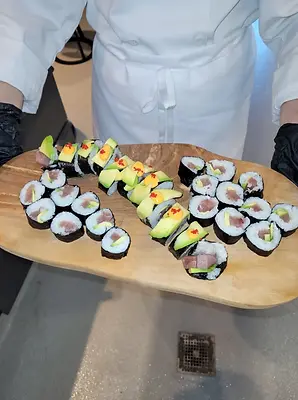
- This lab was so much fun! Sushi is such a practical skill and learning how to make my favorite, spicy tuna hand rolls was a game changer.
- Success Of Cooking Method:
- Sensory Results:
- Taste: the flavors between Korea and Japan were similar, but Korea has a depth of spice to their dishes. Japan is more focused on freshness
- Flavor: flavors have to be balanced on a plate for both countries.
- Texture: textures vary, but are crunchy veggies, sticky rice, and softer proteins
- Appearance: bright, balanced with white rice
Evaluation Of Results:
What worked well?
- My group worked on sushi, and all the rolls turned out beautiful! The Soba group also did well making their own noodles.
What did not work well?
- The kimchi had a very good flavor profile, but making this dish in one day is not ideal. The cabbage needs a few weeks to ferment properly and flavor to develop.
Improvements to be made:
- I'm proud of us in this lab! Each week we have to do better and better about working together as a team to plate for the party and create unique food for us to learn from.
Inspiration Photos:


Kat's Cucumber salad