
WEEK 2: A CURING BLOG
INTRODUCTION:
COOKERY TOPIC: Cured & Smoked Foods
THE MENU:
-
Gravlax with Caraway, Coriander, & Mustard-Dill Sauce
-
Sesame Ginger Slaw
MY PRIOR KNOWLEDGE:
I have been working in the back-of-house at The Depot, in downtown Auburn since November of 2020. During my time in The Depot kitchen, I worked with Gravlax in preparation for our many Sunday brunch services. We would receive the salmon, and our head chef, Chef Scott, would cure the fish himself. For Sunday brunch, I would often cut the fish into thin slices for plating on Avocado Toast.
LEARNING OBJECTIVES:
-
Knowing the needed ingredients for curing food, specifically seafood
-
Understanding the role of curing salts in preserving food
-
Discuss seasoning and flavoring options for both smoked & cured foods
BACKGROUND:
What Is Curing?
- "curing refers to various preservation and flavoring processes, especially of meat or fish, by the addition of a combination of salt, sugar and either nitrate or nitrite."
Science Of Cooking. (n.d.). (Adsbygoogle = WINDOW.ADSBYGOOGLE || []).PUSH({}); what Is curing? What is Curing of Food. https://www.scienceofcooking.com/what-is-curing.html.
History of the Infamous Gravlax:
- The dish claims its roots in North-Sweden, and the first noted time that the dish was prepared dates back to the 1300's. The name "gravad lax" translates to roughly mean "buried salmon". During this time in North-Sweden and Arctic Norway, lower-class citizens and fishermen would dig holes in the ground, create a bath for the fish, and allow the fish to cure for a couple days. The bath consisted of the fish's blood, local spices and herbs.
House of Hegelund © 2018. All rights reserved. Terms & ConditionsMy Account Gnist - Web som funkler! (2019, February 8). Gravlax: The ARCTIC origins of a Legendary Dish. House of Hegelund. https://houseofhegelund.com/blog/2018/01/09/gravlax-the-arctic-origins-of-a-legendary-dish/.
RECIPES:
My Inspiration:
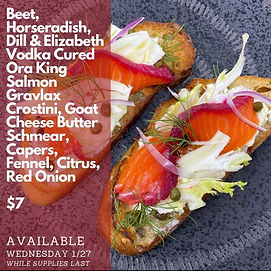
Image from The Depot's Instagram, Gravlax Toast

Gravlax with Mustard-Dill Sauce, Manu's Menu

Sesame Ginger Slaw, from Connoisseurus Veg


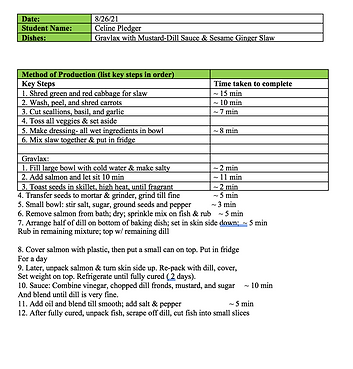
PLAN OF WORK
Week 2: Reflection
Lab Outcomes:
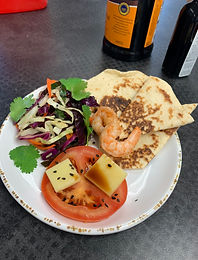
For Week 2 lab, we as a class started curing two salmon filets for Gravlax, prepared the Sesame Ginger Slaw, but with three different prep methods, as well as cold-smoking shrimp and tomatoes.
Dish Results:
Gravlax: The cured salmon took 8-10 minutes to prepare; the fish was placed in a salt water solution, and sat for around 15 minutes. After this period, the fish was taken out of the water, dried, and packed with the dry cure seasonings. The salmon was wrapped loosely with saran wrap, and placed in a hotel pan, Another hotel pan was placed on top of the fish, and weighed down with bricks. The salmon will be kept to cure in the fridge for 4 days. The texture of the fish was smooth, with a bright pink color.
Sesame Ginger Slaw: Our class wanted to practice with different methods of preparing the red and green cabbage for the slaw. I decided to cut the cabbage with a mandolin, since I have used one at work, but wanted more practice with it. The texture of all the slaws were very similar, and taste was on point for everyone. But I did prefer the appearance of our slaw the best. The mandolin created longer cuts, which I thought made the plate look more full.
Meringue: The class had an additional idea to try making meringue using a double broiler- about half was piped out and baked, the other was plated and torched. The meringue that was torched was paired with chocolate to create this smoky, s'more like dessert. The meringue was super sweet and fluffy, and paired so well over coffee.


CURING GRAVLAX
SESAME GINGER SLAW
PLATED & TORCHED MERINGUE
Results evaluation:
When we cold smoked the shrimp, the expectation was that the shrimp would have a strong hickory-smoked flavor, almost like it had just been grilled. After leaving the shrimp in the cold brine for about thirty minutes, it did come out with a nice flavor- but for me not the exact profile I was hoping for. To potentially improve the flavor, the shrimp could have been left in the brine for an hour, and smoked for around 5 minutes longer.
I watched a video from Japanese Cuisine where they also used the same gun to smoke shrimp & scallops. It seems their flavor was more developed using two types of wood chips, and letting the smoke develop longer, and then removing the hose. I watched a second video about the Breville Smoking Gun, and with the stand mixer, we could have tried whisking the meringue while infusing the smoke- just to see how the flavor would be enhanced.
YouTube. (2019). Smoked Seafood Salad with Smoking Gun. YouTube. https://www.youtube.com/watch?v=rD_LuOkhvx8.
YouTube. (2017). Smoking Gun Pro Techniques- Stand Mixer. YouTube. https://www.youtube.com/watch?v=b4UlBpg9AnU.
Conclusion:
Of the three main objectives that I had listed for this lab, I believe I best understand the role of curing salts in preserving food. It's super interesting the process of the salt drawing out moisture and loosening the muscle, then the food is in a preserved state. In class, I practiced working with a mandolin and my knife skills while making the slaw. Also, when making the dressing, I was reminded to taste and season as one goes along. From what I learned in lab, I would like to go back to The Depot and recommend to Chef that we should try a smoking gun. Lastly, I need to practice working with meringue. I watched it being made, but I have never made it myself.
