WEEK 5: A Quick breads & fried dough blog
INTRODUCTION:
COOKERY TOPIC: Quick breads/soft doughs & batters (no leavening required) as well as fried dough for doughnuts or beignets!
THE MENU:
-
Muffins
-
Biscuit 1 & 2
-
Yeast-Raised Doughnuts
MY PRIOR KNOWLEDGE:
My prior knowledge of breads has been growing since we have been in Baking & Pastry, but there is still so much more for me to learn. I have a small background in fried dough- I have attempted making beignets at home, but they did not turn out well. But I have visited Mobile & New Orleans many times and have experienced what a true beignet should taste & look like.
LEARNING OBJECTIVES:
-
Quick Breads
-
prepare muffins, loaf breads, coffee cakes, and corn breads
-
prepare baking powder biscuits and variations of them
-
-
Fried Doughs
-
prepare doughnuts and other deep-fried desserts and pastries
-
prepare pancakes, waffles, & crêpes
-
BACKGROUND:
Quick dough recipes came about when restaurants wanted to make their own bread, but did not have the time to invest in yeast breads. Also, the labor cost is too heavy for a restaurant to invest the employee power into having one individual to go through the bread-making process. Quick breads are leavened, or raised, by chemical leaveners and steam, not yeast. This makes for a faster process since there is no fermentation time (Gisslen, 2021, p. 221).
Fried doughs are typically used for doughnuts or other fried pastries, i.e beignets. When making yeast-raised doughnuts, the dough is similar to sweet dough, but less rich due to lower amount of fat, sugar & eggs. On the other hand, when making cake-type doughnuts. Typically in an operation if these are being made, there is a machine that drops the batter into the hot fat (Gisslen, 2021, p. 239).
Gisslen, W. (2021). Professional Baking, Enhanced eText (8th Edition). Wiley Global Education US. https://bookshelf.vitalsource.com/books/9781119744955
RECIPES:
My Inspiration:
Muffins! Chocolate & Blueberry

Contributor, L. L. (2021, December 14). Chocolate Muffins. Lil’ Luna. Retrieved February 9, 2022, from https://lilluna.com/chocolate-overload-muffins/

H. (2019, June 27). Gwyneth’s Blueberry Muffins Recipe. Foodiecrush. Retrieved February 9, 2022, from https://www.foodiecrush.com/craving-6-blueberry-muffin-esque-recipes/

Biscuits!
Kenji-López, J. (2019, April 10). The Food Lab’s Buttermilk Biscuits Recipe. Serious Eats. Retrieved February 9, 2022, from https://www.seriouseats.com/the-food-lab-buttermilk-biscuits-recipe

Yeast-Raised Doughnuts
D. (2020, March 17). Glazed Doughnuts. Taste and Tell. Retrieved February 9, 2022, from https://www.tasteandtellblog.com/doughnuts/
MUFFINS
BISCUIT 1

Biscuit 2

Yeast Raised Doughnuts


Week 5: Reflection
Lab Outcomes: This week, while focusing on quick breads & fried doughs we not only practiced time management skills, we learned that depending on the kitchen one is working in, the recipe can differ based on many external factors.
Dish Results:
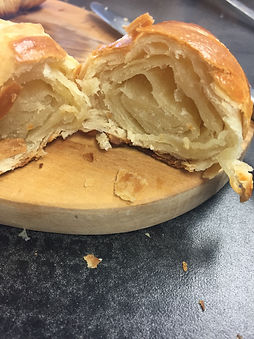
Croissants: Last week we started this dough and created one fold. This week we allowed the dough to defrost, and worked with it every 30 minutes or so, creating 1-2 folds. Over the entire lab, we made around 5 folds overall, which created a gorgeous end product! After letting the croissants rest for about 20 minutes, we let them bake for 30-35 minutes at 400F. When taking them out and taste testing the bread, the dough in the middle was almost runny/oily- kind of a uncooked texture. The class came to the conclusion that the croissants should have baked at a lower temp, to avoid the tops getting burnt, and for longer to cook all the way.
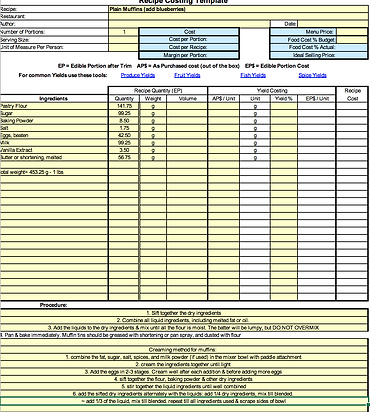
Biscuits 1 &2: The main difference between the two biscuit recipes is that with biscuit 2, the flour, sugar, fat, and milk powder are creamed together with the paddle before mixing in the rest of the ingredients. This difference in the two methods is supposed to offer a more fluffy texture; to me personally it depends on the mixing method, My group did the creaming method, but our "drop biscuits" turned out not as fluffy as they should have. We also made ours cheddar biscuits, but the cheese flavor did not really come through- maybe add melted cheese at the end?
Muffins: I worked the most with the muffin recipe; our group decided to do strawberry! My only experience with baking muffins in the past have been using the instant mix, so this was a change of pace for me. It was an easy to follow recipe- the main struggle was adding the fruit to the batter. The batter came out almost like pancake batter, so pretty thick. I experimented with how to add in strawberry to the muffins- I did small dice, medium dice, and slices of berry. The medium dice seemed to work the best; the slices were too big and the muffin could not get fully solid in the center.
Yeast Doughnuts: the doughnut batter was made in a huge batch for each group to have a little bit of it to make our own flavors. The dough was a bit sticky to work with; but surprisingly a lot of the doughnuts held their shape in the fermenting and frying process. This dough was a combo of the creaming method and modified straight dough- the sugar, fat, and milk was to be creamed first, and then all other ingredients added in after.
Results evaluation: This week, we worked with only 7 people in the lab, instead of 8 as usual, as well as working with 5 recipes. This posed a challenge to us to get everything finished within our 5 hour time limit. We did accomplish this goal. Also, we learned that our convection oven runs very high, therefore if we use it, we may need to lower the temp and cook food for longer.
Conclusion: Of the learning objectives from this week, I feel like I have the best understanding of muffins from quick breads and doughnuts from the fried doughs. I feel knowing the muffins will be the most useful knowledge because these can be easily made in a restaurant setting to add to a brunch menu and make some pretty easy money.
IMAGES & FOOD COST: